BlackBear Shortage List 2026
On paper, hiring should be getting easier.
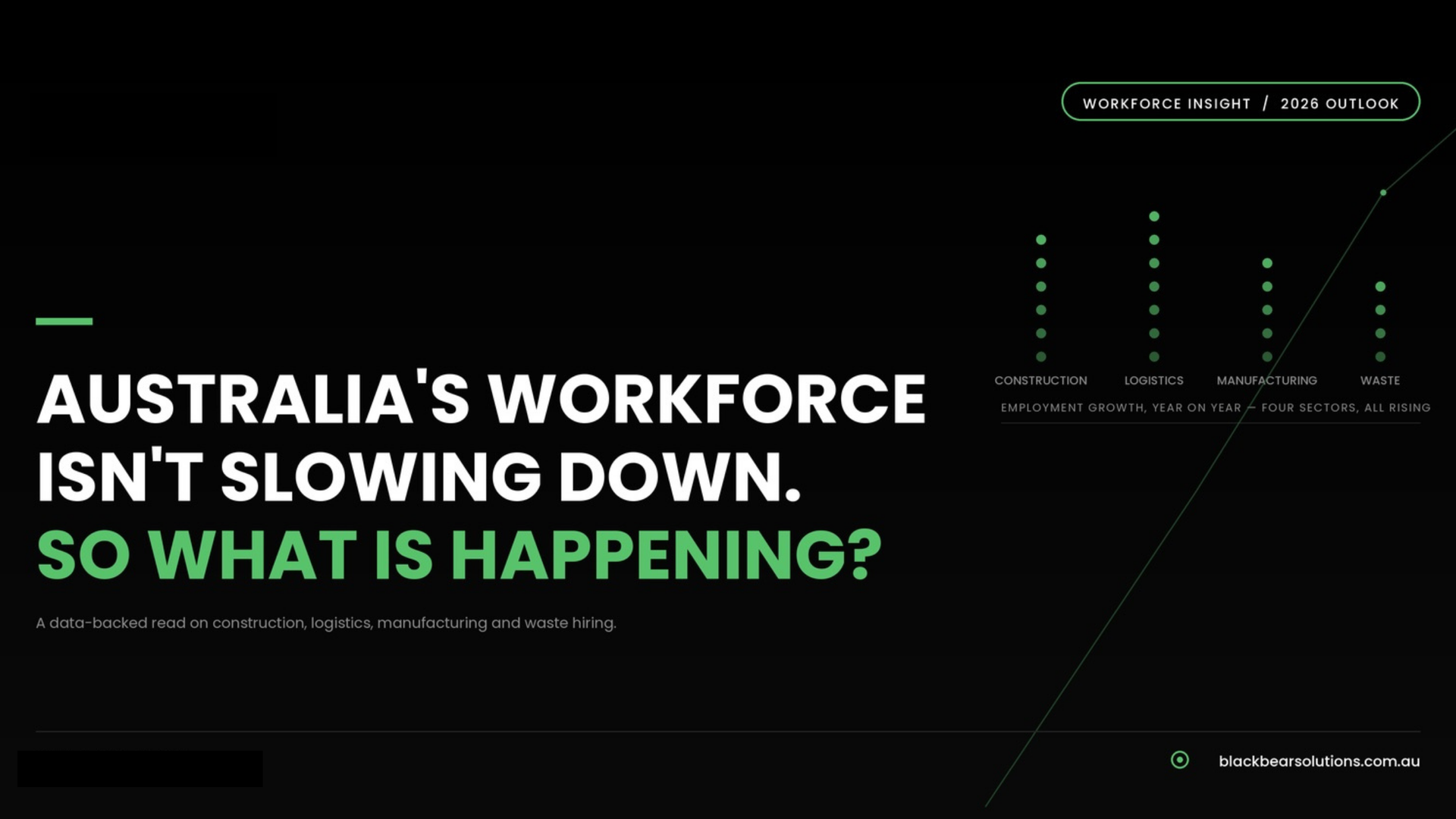
Australia's unemployment rate rose to 4.9% in October, its highest level since October 2021. Job vacancies have fallen to 325,000, about 31% below their 2022 peak. And in October, Jobs and Skills Australia released its 2026 Occupation Shortage List showing that 279 of the 1,021 occupations it assessed are in national shortage. That's 27%, down from 29% last year and well below the 36% peak in 2023.
More people looking for work. Fewer jobs advertised. Fewer occupations in shortage.
So why are so many sites, warehouses and depots still struggling to fill shifts?
Because the national numbers hide what's happening in the roles our clients hire for every day.
The easing has skipped the trades and the floor
Look past the headline and the picture changes quickly.
- Almost half of all trades occupations are still in shortage. In 2026, 48% of Technicians and Trades Workers occupations were rated in national shortage.
- Some shortages simply don't go away. 127 occupations have been in shortage on every list since 2021, and trades make up the largest share of them.
- Machine operators and drivers are getting harder to hire, not easier. In the March quarter of 2026, employers filled 60.8% of vacancies for Machinery Operators and Drivers. That's down 9.4 percentage points on a year earlier. Nine Machinery Operator and Driver occupations moved onto the shortage list this year, including earthmoving plant operators.
- Trades are the hardest group of all to fill. Employers filled just 55.1% of Technicians and Trades Workers vacancies in the same quarter, with only 3.8 suitable applicants per vacancy.
Construction has its own pressure on top of this. Infrastructure Australia estimates the infrastructure sector was already short of around 141,000 workers, with that gap projected to reach a peak of 300,000 by 2027 as a record $242 billion public pipeline gets underway. Regional shortages are forecast to quadruple between 2025 and 2027.
The trades still in national shortage
These are the trades and operator roles across construction, manufacturing and transport that are rated in national shortage on the latest list.
Construction
- Electrician (General)
- Plumber (General)
- Carpenter and Joiner
- Bricklayer
- Wall and Floor Tiler
- Plasterer (Wall and Ceiling) and Renderer
- Painter
- Roof Tiler
- Glazier
- Scaffolder
- Steel Fixer
- Cabinet Maker
Manufacturing and engineering
- Metal Fabricator
- Welder (First Class)
- Fitter (General)
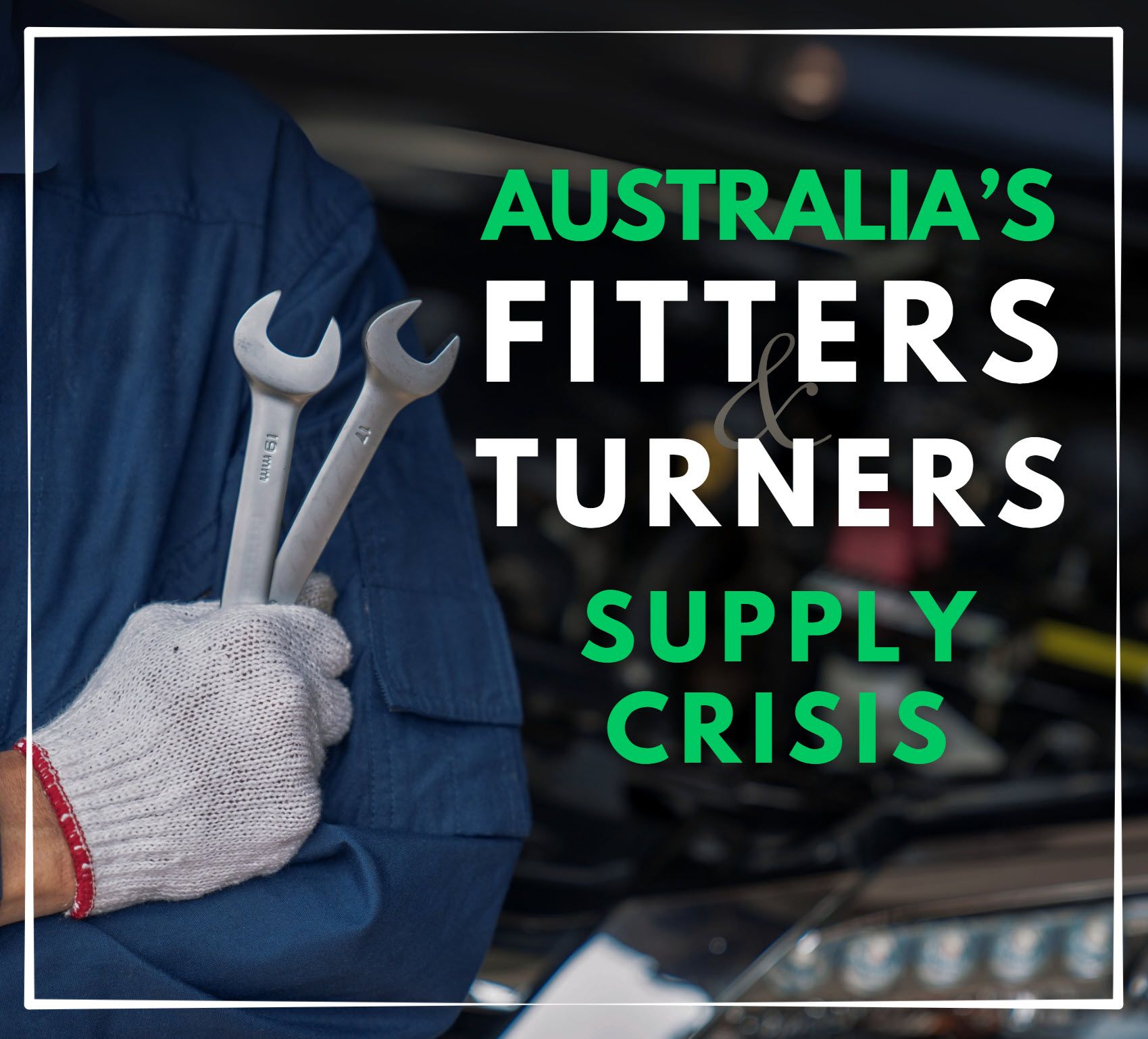
- Fitter and Turner
- Metal Machinist (First Class)
- Sheetmetal Worker
- Airconditioning and Refrigeration Mechanic
Plant, transport and maintenance
- Earthmoving Plant Operator (General) (moved into shortage this year)
- Excavator Operator
- Truck Driver (General)
- Diesel Motor Mechanic
- Motor Mechanic (General)
- Tow Truck Driver (moved into shortage this year)
The reasons differ from trade to trade. Electricians are mainly short because of suitability: plenty are qualified, but employers struggle to find the right experience. Carpenters and plumbers are mainly short because not enough people are coming through training. Bricklayers, plasterers and tilers are mainly short because of retention: people enter the trade, then leave.
Some high-volume roles are not rated in national shortage, including Forklift Driver, Storeperson and Delivery Driver. Crane, Hoist or Lift Operator and Structural Steel Erector came off the list this year. Easier to find on paper, though, doesn't mean easier to keep. These are often the roles where turnover hurts most, because they're filled in volume.
More applicants isn't the same as more of the right people
Here's the part that surprises many employers. Applications are up. In the June quarter of 2026, employers saw more total, qualified and suitable applicants per vacancy than a year earlier. Yet the national fill rate was 69.1%, still 1 percentage point lower than twelve months before.
The gap shows up clearly when you compare occupations in shortage with those that aren't:
- Share of vacancies filled: 57% for shortage occupations, compared with 78% for the rest.
- Qualified applicants per vacancy: 6.3, compared with 12.8.
- How long a vacancy stays open: 10.6 weeks, compared with 7.8 weeks.
- Employers reporting recruitment difficulty: 54%, compared with 36%.
Source: Jobs and Skills Australia, 2026 Occupation Shortage List (survey data, 2025–26).
Think about what that means for a shortage role. For every vacancy there were 6.3 qualified applicants on average, but only 3.3 that employers considered suitable. Roughly half the qualified people who apply don't make the cut. And the role stays open almost three weeks longer. That's three extra weeks of overtime, stretched supervisors and work that doesn't get done.
A full inbox isn't a full crew.
Three reasons a role stays empty
The most useful part of this year's release is that it doesn't just count shortages. It looks at why they happen. Jobs and Skills Australia's Occupation Shortage Drivers analysis groups the causes into three main types:
- The training gap. Not enough people are starting, finishing or getting licensed in the role.
- The suitability gap. There are enough qualified applicants, but employers don't find them suitable, often because of limited work experience or employability skills.
- The retention gap. People enter the occupation, but they leave at above-average rates, so employers have to recruit again and again.
Suitability is the most common main driver across the list. Training is close behind. Retention ranks third overall, but Jobs and Skills Australia found it concentrated among trades workers in industries including construction.
Here's what matters for employers. The training gap is a long-term fix for government, industry and training providers. But suitability and retention are decided much closer to home: in how you describe the role, how you screen for it, and what happens in someone's first few weeks on your site.
Movement is highest in blue collar roles
People in blue collar roles also change jobs more often than most. According to the ABS, 7.2% of employed Australians changed employer in the year to February 2026, down from 7.7% the year before. But in construction it was 9.2%, and among machinery operators and drivers it was 9.5%.
In other words, even in a cooler market, the people you most need are the people most likely to move. If a competitor offers a better start, a clearer roster or a supervisor who actually checks in, they'll go.
What you can do about suitability
A suitability gap usually starts before anyone applies.
- Be specific about the role. "General hand" attracts everyone. "Afternoon shift, forklift licence, reach truck experience, Dandenong South" attracts the people who can actually do it.
- Be honest about the conditions. Early starts, heat, heavy lifting, rotating rosters. Overseas onboarding research consistently finds that a mismatch between what people expected and what the job turned out to be is the single biggest reason new starters leave early.
- Look past the CV. Jobs and Skills Australia's own definition of a suitability gap points to work experience and employability skills. In blue collar roles, the best indicator is often what someone has actually done on a floor like yours, not how well they write about it.
- Use people who know your sector. A recruiter who understands your equipment, your shifts and your site can screen for fit, not just availability.
What you can do about retention
Retention is where most of the hidden cost sits. When someone leaves in the first few weeks, you start the whole process again, and your supervisors carry the load in between.
We wrote about how quickly that adds up in The charge rate trap.
The first month matters most. BambooHR's onboarding research found that 70% of new hires decide whether a job is the right fit within their first month, and 29% know within the first week.
Most of what keeps people is simple and costs very little:
- a proper welcome on day one, not just a site induction
- a buddy for the first week
- a check-in at the end of week one and week four
- acting early if a placement isn't working, rather than waiting for it to fail
Our one-page new starter checklist covers these and a few more. None of them cost a cent.
Why this matters right now
The Christmas period is when all of this gets tested at once. Some sites wind down for shutdowns, others hit peak, and almost everyone restarts in January at the same time. That's exactly when suitability and retention gaps show up, because everyone is hiring quickly from the same pool.
If you're bringing people on for the new year, now is the time to get specific about what you need. Our free Christmas crew planner puts your dates, gaps and first-week plan on a single page.
Where does your business sit?
If you're not sure whether suitability or retention is costing you, the Workforce Risk Check is a good place to start. It's eight questions, takes about two minutes, and gives you a Low, Medium or High risk score with a practical checklist matched to your result.
Or if you'd rather talk it through, I'm always happy to have a straight 15-minute conversation. Email me at dennis.reubens@blackbearsolutions.com.au or call 0451 523 432.
Sources
- Australian Bureau of Statistics, Labour Force, Australia, October 2026 (released 19 November 2026)
- Australian Bureau of Statistics, Job Vacancies, Australia, August 2026
- Australian Bureau of Statistics, Job Mobility, February 2026
- Jobs and Skills Australia, 2026 Occupation Shortage List: Key Findings Report, October 2026
- Jobs and Skills Australia, 2026 Occupation Shortage Drivers, October 2026
- Jobs and Skills Australia, 2026 Occupation Shortage List (national ratings by occupation), October 2026
- Jobs and Skills Australia, Occupation Shortage Report, March quarter 2026, and Employer Activity Insights, June quarter 2026
- Infrastructure Australia, 2025 Infrastructure Market Capacity Report, November 2025
- BambooHR, onboarding survey (US employees)
Black Bear Solutions provides recruitment and labour hire across NSW, VIC and QLD, specialising in manufacturing, logistics, construction, waste management, executive, IT and office support.